Support our educational content for free when you buy through links on our site. Learn more
Unlocking the Power of a Plant-Based Lifestyle 🌿 (2026)


Are you curious about what it truly means to live a plant-based lifestyle—and whether it’s the right choice for you? You’re not alone! From celebrities to everyday health seekers, the buzz around plant-based eating is louder than ever. But beyond the hype, what’s the real story? Is it just a trendy diet, or a transformative way to boost your health, protect the planet, and savor incredible food?
At Flexitarian Diet™, we’ve walked the walk and tasted the rainbow—literally. In this comprehensive guide, we’ll unravel the history, science, and practical tips behind plant-based living. Wondering how to get enough protein without meat? Or how a plant-forward approach helped Mayor Eric Adams reverse his diabetes? We’ve got you covered. Plus, we’ll share mouthwatering meal inspirations and expert advice to make your transition smooth and sustainable. Ready to discover how plants can power your life? Let’s dive in!
Key Takeaways
- A plant-based lifestyle prioritizes whole, nutrient-rich plant foods while allowing flexibility with animal products, making it accessible and sustainable.
- Scientific research links plant-based eating to lower risks of chronic diseases, improved weight management, and enhanced mental well-being.
- Transitioning gradually with simple swaps and diverse meals can help overcome common challenges and cravings.
- Plant-based diets not only benefit personal health but also significantly reduce environmental impact, making your food choices a powerful act of stewardship.
- You don’t have to be vegan to reap the benefits—embracing more plants in your diet, even flexibly, can transform your health and lifestyle.
Curious about the best plant-based recipes or how to shop smart for your new lifestyle? Keep reading for all that and more!
Table of Contents
- ⚡️ Quick Tips and Facts About a Plant-Based Lifestyle
- 🌱 The Roots and Rise of Plant-Based Living: History & Evolution
- 🥦 What Exactly Is a Plant-Based Lifestyle? Definitions & Variations
- 🍽️ 10 Essential Benefits of Embracing a Plant-Based Diet
- 🥕 How to Get Started: Practical Steps to Transition Smoothly
- 🍳 Inspiration for Plant-Based Eating: Delicious Meals from Dawn to Dusk
- 🥗 Exploring Vegetarian and Mediterranean Diets: Plant-Based Powerhouses
- 🌍 Environmental Impact: How Plant-Based Choices Help Save the Planet
- 💪 Plant-Based Nutrition: Meeting Your Protein, Vitamins & Minerals Needs
- 🛒 Shopping Smart: Best Brands and Products for a Plant-Based Pantry
- 🏋️ ♀️ Fitness and Plant-Based Eating: Fueling Your Workouts the Green Way
- 🧘 ♀️ Mental Health and Plant-Based Diets: The Mood-Boosting Connection
- 👨 👩 👧 👦 Family-Friendly Plant-Based Living: Tips for Kids and Picky Eaters
- 🔄 Common Challenges and How to Overcome Them on a Plant-Based Journey
- 📚 A Guide to Healthy Eating: Strategies, Tips, and Recipes for Plant-Based Success
- 🌟 Real Stories: Personal Experiences from Our Flexitarian Team
- 🔗 Helpful Resources and Links for Plant-Based Enthusiasts
- 👩 ⚕️ About the Flexitarian Diet™ Expert Team
- 📌 Related Topics You’ll Love to Explore
- 📝 Frequently Asked Questions (FAQ) About Plant-Based Lifestyles
- 🔚 Conclusion: Your Next Steps Toward a Vibrant Plant-Based Life
- 🌐 Recommended Links for Deeper Plant-Based Knowledge
- 📖 Reference Links and Scientific Sources
⚡️ Quick Tips and Facts About a Plant-Based Lifestyle
Welcome to the vibrant world of plant-based living! 🌱 Here at Flexitarian Diet™, we’re not just experts; we’re enthusiasts who’ve seen firsthand the incredible transformations that come with embracing more plants. Before we dive deep, let’s kick things off with some quick, digestible facts and tips that will get your green gears turning!
Did You Know?
- It’s Not All or Nothing! 🌿 A plant-based diet doesn’t automatically mean you’re vegan or vegetarian. As Harvard Health Publishing wisely puts it, “Plant-based or plant-forward eating patterns focus on foods primarily from plants.” This means you’re simply prioritizing fruits, vegetables, nuts, seeds, whole grains, and legumes, while still having the flexibility to include smaller amounts of animal products. This is where the beauty of a flexitarian diet truly shines!
- Fiber is Your Friend! Plant-based diets are naturally rich in fiber, which is crucial for gut health, satiety, and stable blood sugar levels. Most Americans don’t get enough!
- Nutrient Powerhouses: Plants are packed with essential vitamins, minerals, and phytonutrients that work wonders for your body. From vibrant berries bursting with antioxidants to leafy greens loaded with iron, nature’s pantry has it all.
- Weight Management Magic: Studies consistently show that individuals following plant-based diets tend to have lower BMIs. In fact, a study referenced in a compelling presentation on plant-based health benefits noted that “vegans have the lowest BMI” among various dietary groups. You can explore more about this research in the featured video later in this article!
- Beyond the Plate: Embracing a plant-based lifestyle extends beyond just food. It often inspires a holistic approach to wellness, impacting your energy levels, mental clarity, and even your environmental footprint. Mayor Eric Adams, a proponent of plant-based eating, reported “amazing” energy levels and improved health after adopting this lifestyle, as highlighted by Columbia University Irving Medical Center.
Our Team’s Quick Tip: “Start small, dream big! Don’t overhaul your entire pantry overnight. Try one plant-based meal a day, or commit to ‘Meatless Mondays.’ My personal journey began with swapping out dairy milk for oat milk, and now I can’t imagine going back!” – Sarah, Flexitarian Diet™ Health Coach
Ready to dig deeper? Let’s unearth the fascinating history of this powerful way of eating!
🌱 The Roots and Rise of Plant-Based Living: History & Evolution

Ever wonder if eating plants is just a modern fad? Think again! The concept of a plant-centric diet is as old as civilization itself, deeply woven into the fabric of human history. From ancient philosophers to modern-day health advocates, the wisdom of plants has echoed through the ages.
Ancient Wisdom: A Timeless Connection to Nature
Long before “plant-based” became a buzzword, many ancient cultures thrived on diets rich in plant foods. Think of the traditional Mediterranean diet, a cornerstone of health for millennia, built on grains, legumes, fruits, vegetables, and olive oil, with meat as a rare guest. Philosophers like Pythagoras advocated for vegetarianism, believing it fostered a more peaceful and ethical existence. Across Asia, diets centered around rice, vegetables, and tofu have sustained populations for centuries, showcasing the incredible resilience and nutritional completeness of plant-focused eating.
The Evolution of Modern Plant-Based Movements
The 20th century saw a resurgence of interest, giving rise to more defined dietary movements:
- Vegetarianism: Gained traction as a health and ethical choice, with various forms emerging (lacto-ovo, pescatarian, etc.).
- Veganism: Evolved from vegetarianism, advocating for the exclusion of all animal products, not just for diet but as a lifestyle choice against animal exploitation. Forks Over Knives clarifies this distinction, stating that “Veganism avoids all animal products and exploitation in all aspects of life (food, clothing, shoes, etc.).”
- Whole-Food, Plant-Based (WFPB): This is where the science really started to shine! As championed by organizations like Forks Over Knives, the WFPB movement emphasizes unrefined, nutrient-dense, fiber-rich foods close to their natural state. It’s about maximizing health benefits by minimizing processed foods and animal products. Forks Over Knives promotes a diet that is “completely free of animal products and therefore vegan,” but the core principle is the whole food aspect.
The Current Boom: Health, Ethics, and the Planet
Today, the plant-based lifestyle is experiencing an unprecedented boom. Why? Because the evidence is overwhelming!
- Health Crisis: With rising rates of chronic diseases like diabetes and heart disease, people are actively seeking preventive and even reversal strategies. Mayor Eric Adams’ personal journey with diabetes reversal through a plant-based diet, as reported by Columbia University, is a powerful testament to this.
- Ethical Concerns: Growing awareness of animal welfare in industrial farming practices.
- Environmental Imperative: A deeper understanding of how our food choices impact climate change, water resources, and biodiversity. We’ll delve into this more later!
This isn’t just a trend; it’s a paradigm shift towards a more sustainable, compassionate, and incredibly healthy way of living. But what exactly does “plant-based” mean in today’s diverse culinary landscape? Let’s define it!
🥦 What Exactly Is a Plant-Based Lifestyle? Definitions & Variations
Alright, let’s clear the air! The term “plant-based” can sometimes feel a bit like a chameleon, changing its colors depending on who you’re talking to. But fear not, we’re here to give you the definitive scoop from our team of dietitians and health coaches.
At its core, a plant-based lifestyle is about prioritizing foods that come from plants. As Harvard Health Publishing succinctly puts it, it’s about “eating patterns [that] focus on foods primarily from plants.” This includes a vibrant array of:
- 🍎 Fruits
- 🥦 Vegetables
- 🌰 Nuts and Seeds
- 🌾 Whole Grains
- 🫘 Legumes and Beans
- 🥑 Healthy Oils
Here’s the crucial distinction: A plant-based diet does not necessarily mean vegetarian or vegan. This is a common misconception! Both Harvard and Columbia University emphasize this flexibility. While you’re loading up on plant power, you can still include smaller amounts of meat, dairy, eggs, or fish. Columbia suggests a great starting point: aim for at least 2/3 of each meal from plants and no more than 1/3 animal products. Think of it as a spectrum, not a strict binary.
Plant-Based vs. Whole-Food, Plant-Based vs. Vegan: What’s the Difference?
This is where things get interesting, and understanding the nuances can help you tailor your approach.
- Plant-Based (General): The broad umbrella term. Focuses on increasing plant foods, reducing animal products. Offers flexibility.
- Whole-Food, Plant-Based (WFPB): This is the “gold standard” for health, as advocated by Forks Over Knives. It’s a stricter form of plant-based eating that emphasizes unrefined, unprocessed foods in their natural state. Think brown rice instead of white rice, whole fruits instead of fruit juice, and homemade meals instead of highly processed vegan junk food. It typically eliminates or minimizes all animal products and highly processed foods, aiming for maximum nutrient density.
- Vegan: A lifestyle choice that avoids all animal products and by-products (food, clothing, cosmetics, etc.) due to ethical, environmental, or health reasons. While a WFPB diet is often vegan, a vegan diet isn’t always WFPB (e.g., a vegan could eat highly processed vegan cookies and fries).
The Spectrum of Plant-Forward Eating: Find Your Fit!
To help you visualize the different shades of green, here’s a breakdown of common plant-based variations, drawing from the insights of Harvard Health:
| Diet Type | Description Plant Based Lifestyle: Your Ultimate Guide to Thriving on a Plant-Powered Path! 🚀
Hey there, future plant-powered legend! 👋 Ever felt like the world of healthy eating is a confusing jungle of diets, rules, and “superfoods” you can’t even pronounce? We get it! That’s why we, the expert team of flexitarian cooks, dietitians, personal trainers, and health coaches at Flexitarian Diet™, are here to be your friendly, witty, and incredibly helpful guides.
We’re passionate about showing you how a plant-based lifestyle isn’t about deprivation; it’s about abundance, flavor, vitality, and feeling absolutely amazing! Forget bland salads and complicated recipes. We’re talking about delicious, satisfying meals that fuel your body, sharpen your mind, and even help the planet. Intrigued? Let’s dig in!
⚡️ Quick Tips and Facts About a Plant-Based Lifestyle
Welcome to the vibrant world of plant-based living! 🌱 Here at Flexitarian Diet™, we’re not just experts; we’re enthusiasts who’ve seen firsthand the incredible transformations that come with embracing more plants. Before we dive deep, let’s kick things off with some quick, digestible facts and tips that will get your green gears turning!
Did You Know?
- It’s Not All or Nothing! 🌿 A plant-based diet doesn’t automatically mean you’re vegan or vegetarian. As Harvard Health Publishing wisely puts it, “Plant-based or plant-forward eating patterns focus on foods primarily from plants.” This means you’re simply prioritizing fruits, vegetables, nuts, seeds, whole grains, and legumes, while still having the flexibility to include smaller amounts of animal products. This is where the beauty of a flexitarian diet truly shines!
- Fiber is Your Friend! Plant-based diets are naturally rich in fiber, which is crucial for gut health, satiety, and stable blood sugar levels. Most Americans don’t get enough! According to the American Society for Nutrition, only about 5% of adults meet the daily fiber recommendations. Source: American Society for Nutrition
- Nutrient Powerhouses: Plants are packed with essential vitamins, minerals, and phytonutrients that work wonders for your body. From vibrant berries bursting with antioxidants to leafy greens loaded with iron, nature’s pantry has it all.
- Weight Management Magic: Studies consistently show that individuals following plant-based diets tend to have lower BMIs. In fact, a study referenced in a compelling presentation on plant-based health benefits noted that “vegans have the lowest BMI” among various dietary groups. You can explore more about this research in the featured video later in this article!
- Beyond the Plate: Embracing a plant-based lifestyle extends beyond just food. It often inspires a holistic approach to wellness, impacting your energy levels, mental clarity, and even your environmental footprint. Mayor Eric Adams, a proponent of plant-based eating, reported “amazing” energy levels and improved health after adopting this lifestyle, as highlighted by Columbia University Irving Medical Center. Source: Columbia University Irving Medical Center
Our Team’s Quick Tip: “Start small, dream big! Don’t overhaul your entire pantry overnight. Try one plant-based meal a day, or commit to ‘Meatless Mondays.’ My personal journey began with swapping out dairy milk for oat milk, and now I can’t imagine going back!” – Sarah, Flexitarian Diet™ Health Coach
Ready to dig deeper? Let’s unearth the fascinating history of this powerful way of eating!
🌱 The Roots and Rise of Plant-Based Living: History & Evolution

Ever wonder if eating plants is just a modern fad? Think again! The concept of a plant-centric diet is as old as civilization itself, deeply woven into the fabric of human history. From ancient philosophers to modern-day health advocates, the wisdom of plants has echoed through the ages.
Ancient Wisdom: A Timeless Connection to Nature
Long before “plant-based” became a buzzword, many ancient cultures thrived on diets rich in plant foods. Think of the traditional Mediterranean diet, a cornerstone of health for millennia, built on grains, legumes, fruits, vegetables, and olive oil, with meat as a rare guest. Philosophers like Pythagoras advocated for vegetarianism, believing it fostered a more peaceful and ethical existence. Across Asia, diets centered around rice, vegetables, and tofu have sustained populations for centuries, showcasing the incredible resilience and nutritional completeness of plant-focused eating.
The Evolution of Modern Plant-Based Movements
The 20th century saw a resurgence of interest, giving rise to more defined dietary movements:
- Vegetarianism: Gained traction as a health and ethical choice, with various forms emerging (lacto-ovo, pescatarian, etc.). The Vegetarian Society, founded in 1847, helped popularize the term and its principles. Source: The Vegetarian Society
- Veganism: Evolved from vegetarianism, advocating for the exclusion of all animal products, not just for diet but as a lifestyle choice against animal exploitation. Forks Over Knives clarifies this distinction, stating that “Veganism avoids all animal products and exploitation in all aspects of life (food, clothing, shoes, etc.).” Source: Forks Over Knives The term “vegan” was coined in 1944 by Donald Watson.
- Whole-Food, Plant-Based (WFPB): This is where the science really started to shine! As championed by organizations like Forks Over Knives, the WFPB movement emphasizes unrefined, unprocessed foods in their natural state. Think brown rice instead of white rice, whole fruits instead of fruit juice, and homemade meals instead of highly processed vegan junk food. It typically eliminates or minimizes all animal products and highly processed foods, aiming for maximum nutrient density. Forks Over Knives promotes a diet that is “completely free of animal products and therefore vegan,” but the core principle is the whole food aspect.
The Current Boom: Health, Ethics, and the Planet
Today, the plant-based lifestyle is experiencing an unprecedented boom. Why? Because the evidence is overwhelming!
- Health Crisis: With rising rates of chronic diseases like diabetes and heart disease, people are actively seeking preventive and even reversal strategies. Mayor Eric Adams’ personal journey with diabetes reversal through a plant-based diet, as reported by Columbia University, is a powerful testament to this. Source: Columbia University Irving Medical Center
- Ethical Concerns: Growing awareness of animal welfare in industrial farming practices.
- Environmental Imperative: A deeper understanding of how our food choices impact climate change, water resources, and biodiversity. We’ll delve into this more later! The United Nations Food and Agriculture Organization (FAO) reports that livestock accounts for a significant portion of global greenhouse gas emissions. Source: FAO
This isn’t just a trend; it’s a paradigm shift towards a more sustainable, compassionate, and incredibly healthy way of living. But what exactly does “plant-based” mean in today’s diverse culinary landscape? Let’s define it!
🥦 What Exactly Is a Plant-Based Lifestyle? Definitions & Variations
Alright, let’s clear the air! The term “plant-based” can sometimes feel a bit like a chameleon, changing its colors depending on who you’re talking to. But fear not, we’re here to give you the definitive scoop from our team of dietitians and health coaches.
At its core, a plant-based lifestyle is about prioritizing foods that come from plants. As Harvard Health Publishing succinctly puts it, it’s about “eating patterns [that] focus on foods primarily from plants.” Source: Harvard Health Publishing This includes a vibrant array of:
- 🍎 Fruits
- 🥦 Vegetables
- 🌰 Nuts and Seeds
- 🌾 Whole Grains
- 🫘 Legumes and Beans
- 🥑 Healthy Oils
Here’s the crucial distinction: A plant-based diet does not necessarily mean vegetarian or vegan. This is a common misconception! Both Harvard and Columbia University emphasize this flexibility. While you’re loading up on plant power, you can still include smaller amounts of meat, dairy, eggs, or fish. Columbia suggests a great starting point: aim for at least 2/3 of each meal from plants and no more than 1/3 animal products. Source: Columbia University Irving Medical Center Think of it as a spectrum, not a strict binary.
In fact, Columbia University’s article quotes, “Think of it as a lifestyle change, not a diet.” This perfectly encapsulates our philosophy at Flexitarian Diet™. It’s about sustainable, enjoyable choices that lead to long-term well-being, not restrictive rules. For more on this flexible approach, check out our Flexitarian Basics!
Plant-Based vs. Whole-Food, Plant-Based vs. Vegan: What’s the Difference?
This is where things get interesting, and understanding the nuances can help you tailor your approach.
- Plant-Based (General): The broad umbrella term. Focuses on increasing plant foods, reducing animal products. Offers flexibility. “You are proportionately choosing more of your foods from plant sources,” as Harvard states.
- Whole-Food, Plant-Based (WFPB): This is often considered the “gold standard” for health, as advocated by Forks Over Knives. It’s a stricter form of plant-based eating that emphasizes unrefined, unprocessed foods in their natural state. Think brown rice instead of white rice, whole fruits instead of fruit juice, and homemade meals instead of highly processed vegan junk food. It typically eliminates or minimizes all animal products and highly processed foods, aiming for maximum nutrient density. Forks Over Knives states, “Loading up on fiber-rich, nutrient-dense, close-to-nature foods makes it simple to meet your nutritional needs without exceeding your caloric needs.” Source: Forks Over Knives
- Vegan: A lifestyle choice that avoids all animal products and by-products (food, clothing, cosmetics, etc.) due to ethical, environmental, or health reasons. While a WFPB diet is often vegan, a vegan diet isn’t always WFPB (e.g., a vegan could eat highly processed vegan cookies and fries).
The Spectrum of Plant-Forward Eating: Find Your Fit!
To help you visualize the different shades of green, here’s a breakdown of common plant-based variations, drawing from the insights of Harvard Health:
| Diet Type | Description Plant-Based Lifestyle: Your Ultimate Guide to Thriving on a Plant-Powered Path! 🚀
Hey there, future plant-powered legend! 👋 Ever felt like the world of healthy eating is a confusing jungle of diets, rules, and “superfoods” you can’t even pronounce? We get it! That’s why we, the expert team of flexitarian cooks, dietitians, personal trainers, and health coaches at Flexitarian Diet™, are here to be your friendly, witty, and incredibly helpful guides.
We’re passionate about showing you how a plant-based lifestyle isn’t about deprivation; it’s about abundance, flavor, vitality, and feeling absolutely amazing! Forget bland salads and complicated recipes. We’re talking about delicious, satisfying meals that fuel your body, sharpen your mind, and even help the planet. Intrigued? Let’s dig in!
⚡️ Quick Tips and Facts About a Plant-Based Lifestyle
Welcome to the vibrant world of plant-based living! 🌱 Here at Flexitarian Diet™, we’re not just experts; we’re enthusiasts who’ve seen firsthand the incredible transformations that come with embracing more plants. Before we dive deep, let’s kick things off with some quick, digestible facts and tips that will get your green gears turning!
Did You Know?
- It’s Not All or Nothing! 🌿 A plant-based diet doesn’t automatically mean you’re vegan or vegetarian. As Harvard Health Publishing wisely puts it, “Plant-based or plant-forward eating patterns focus on foods primarily from plants.” Source: Harvard Health Publishing This means you’re simply prioritizing fruits, vegetables, nuts, seeds, whole grains, and legumes, while still having the flexibility to include smaller amounts of animal products. This is where the beauty of a flexitarian diet truly shines!
- Fiber is Your Friend! Plant-based diets are naturally rich in fiber, which is crucial for gut health, satiety, and stable blood sugar levels. Most Americans don’t get enough! According to the American Society for Nutrition, only about 5% of adults meet the daily fiber recommendations. Source: American Society for Nutrition
- Nutrient Powerhouses: Plants are packed with essential vitamins, minerals, and phytonutrients that work wonders for your body. From vibrant berries bursting with antioxidants to leafy greens loaded with iron, nature’s pantry has it all.
- Weight Management Magic: Studies consistently show that individuals following plant-based diets tend to have lower BMIs. In fact, a study referenced in a compelling presentation on plant-based health benefits noted that “vegans have the lowest BMI” among various dietary groups. You can explore more about this research in the featured video later in this article!
- Beyond the Plate: Embracing a plant-based lifestyle extends beyond just food. It often inspires a holistic approach to wellness, impacting your energy levels, mental clarity, and even your environmental footprint. Mayor Eric Adams, a proponent of plant-based eating, reported “amazing” energy levels and improved health after adopting this lifestyle, as highlighted by Columbia University Irving Medical Center. Source: Columbia University Irving Medical Center
Our Team’s Quick Tip: “Start small, dream big! Don’t overhaul your entire pantry overnight. Try one plant-based meal a day, or commit to ‘Meatless Mondays.’ My personal journey began with swapping out dairy milk for oat milk, and now I can’t imagine going back!” – Sarah, Flexitarian Diet™ Health Coach
Ready to dig deeper? Let’s unearth the fascinating history of this powerful way of eating!
🌱 The Roots and Rise of Plant-Based Living: History & Evolution

Ever wonder if eating plants is just a modern fad? Think again! The concept of a plant-centric diet is as old as civilization itself, deeply woven into the fabric of human history. From ancient philosophers to modern-day health advocates, the wisdom of plants has echoed through the ages.
Ancient Wisdom: A Timeless Connection to Nature
Long before “plant-based” became a buzzword, many ancient cultures thrived on diets rich in plant foods. Think of the traditional Mediterranean diet, a cornerstone of health for millennia, built on grains, legumes, fruits, vegetables, and olive oil, with meat as a rare guest. Philosophers like Pythagoras advocated for vegetarianism, believing it fostered a more peaceful and ethical existence. Across Asia, diets centered around rice, vegetables, and tofu have sustained populations for centuries, showcasing the incredible resilience and nutritional completeness of plant-focused eating.
The Evolution of Modern Plant-Based Movements
The 20th century saw a resurgence of interest, giving rise to more defined dietary movements:
- Vegetarianism: Gained traction as a health and ethical choice, with various forms emerging (lacto-ovo, pescatarian, etc.). The Vegetarian Society, founded in 1847, helped popularize the term and its principles. Source: The Vegetarian Society
- Veganism: Evolved from vegetarianism, advocating for the exclusion of all animal products, not just for diet but as a lifestyle choice against animal exploitation. Forks Over Knives clarifies this distinction, stating that “Veganism avoids all animal products and exploitation in all aspects of life (food, clothing, shoes, etc.).” Source: Forks Over Knives The term “vegan” was coined in 1944 by Donald Watson.
- Whole-Food, Plant-Based (WFPB): This is where the science really started to shine! As championed by organizations like Forks Over Knives, the WFPB movement emphasizes unrefined, nutrient-dense, fiber-rich foods close to their natural state. Think brown rice instead of white rice, whole fruits instead of fruit juice, and homemade meals instead of highly processed vegan junk food. It typically eliminates or minimizes all animal products and highly processed foods, aiming for maximum nutrient density. Forks Over Knives promotes a diet that is “completely free of animal products and therefore vegan,” but the core principle is the whole food aspect.
The Current Boom: Health, Ethics, and the Planet
Today, the plant-based lifestyle is experiencing an unprecedented boom. Why? Because the evidence is overwhelming!
- Health Crisis: With rising rates of chronic diseases like diabetes and heart disease, people are actively seeking preventive and even reversal strategies. Mayor Eric Adams’ personal journey with diabetes reversal through a plant-based diet, as reported by Columbia University, is a powerful testament to this. Source: Columbia University Irving Medical Center
- Ethical Concerns: Growing awareness of animal welfare in industrial farming practices.
- Environmental Imperative: A deeper understanding of how our food choices impact climate change, water resources, and biodiversity. We’ll delve into this more later! The United Nations Food and Agriculture Organization (FAO) reports that livestock accounts for a significant portion of global greenhouse gas emissions. Source: FAO
This isn’t just a trend; it’s a paradigm shift towards a more sustainable, compassionate, and incredibly healthy way of living. But what exactly does “plant-based” mean in today’s diverse culinary landscape? Let’s define it!
🥦 What Exactly Is a Plant-Based Lifestyle? Definitions & Variations
Alright, let’s clear the air! The term “plant-based” can sometimes feel a bit like a chameleon, changing its colors depending on who you’re talking to. But fear not, we’re here to give you the definitive scoop from our team of dietitians and health coaches.
At its core, a plant-based lifestyle is about prioritizing foods that come from plants. As Harvard Health Publishing succinctly puts it, it’s about “eating patterns [that] focus on foods primarily from plants.” Source: Harvard Health Publishing This includes a vibrant array of:
- 🍎 Fruits
- 🥦 Vegetables
- 🌰 Nuts and Seeds
- 🌾 Whole Grains
- 🫘 Legumes and Beans
- 🥑 Healthy Oils
Here’s the crucial distinction: A plant-based diet does not necessarily mean vegetarian or vegan. This is a common misconception! Both Harvard and Columbia University emphasize this flexibility. While you’re loading up on plant power, you can still include smaller amounts of meat, dairy, eggs, or fish. Columbia suggests a great starting point: aim for at least 2/3 of each meal from plants and no more than 1/3 animal products. Source: Columbia University Irving Medical Center Think of it as a spectrum, not a strict binary.
In fact, Columbia University’s article quotes, “Think of it as a lifestyle change, not a diet.” This perfectly encapsulates our philosophy at Flexitarian Diet™. It’s about sustainable, enjoyable choices that lead to long-term well-being, not restrictive rules. For more on this flexible approach, check out our Flexitarian Basics!
Plant-Based vs. Whole-Food, Plant-Based vs. Vegan: What’s the Difference?
This is where things get interesting, and understanding the nuances can help you tailor your approach.
- Plant-Based (General): The broad umbrella term. Focuses on increasing plant foods, reducing animal products. Offers flexibility. “You are proportionately choosing more of your foods from plant sources,” as Harvard states.
- Whole-Food, Plant-Based (WFPB): This is often considered the “gold standard” for health, as advocated by Forks Over Knives. It’s a stricter form of plant-based eating that emphasizes unrefined, unprocessed foods in their natural state. Think brown rice instead of white rice, whole fruits instead of fruit juice, and homemade meals instead of highly processed vegan junk food. It typically eliminates or minimizes all animal products and highly processed foods, aiming for maximum nutrient density. Forks Over Knives states, “Loading up on fiber-rich, nutrient-dense, close-to-nature foods makes it simple to meet your nutritional needs without exceeding your caloric needs.” Source: Forks Over Knives
- Vegan: A lifestyle choice that avoids all animal products and by-products (food, clothing, cosmetics, etc.) due to ethical, environmental, or health reasons. While a WFPB diet is often vegan, a vegan diet isn’t always WFPB (e.g., a vegan could eat highly processed vegan cookies and fries).
The Spectrum of Plant-Forward Eating: Find Your Fit!
To help you visualize the different shades of green, here’s a breakdown of common plant-based variations, drawing from the insights of Harvard Health:
| Diet Type | Description plant-based lifestyle is a journey towards a healthier, more sustainable, and often more compassionate way of living. It’s about making conscious choices to nourish your body with the incredible power of plants.
🍽️ 10 Essential Benefits of Embracing a Plant-Based Diet
Alright, let’s get to the good stuff! Why should you consider going plant-based, even if it’s just a little bit? Because the benefits are so compelling, they’ll make you want to do a happy dance! Our team, from our dietitians crunching numbers to our personal trainers seeing real-world results, can confirm: this isn’t just hype. It’s science-backed, life-changing goodness.
Here are 10 essential benefits of embracing a plant-based diet:
- 💪 Boosted Heart Health: This is a big one! Plant-based diets are consistently linked to a lower risk of heart disease. They naturally reduce “bad” LDL cholesterol and blood pressure. Harvard Health Publishing highlights that the Mediterranean diet, a plant-forward pattern, is “shown to reduce risk of heart disease.” Source: Harvard Health Publishing Less saturated fat, more fiber, and a bounty of antioxidants work together to keep your ticker happy.
- 🩸 Better Blood Sugar Control & Diabetes Prevention: For those managing diabetes or looking to prevent it, plant-based eating is a game-changer. The high fiber content slows sugar absorption, leading to more stable blood glucose levels. Columbia University notes that Mayor Eric Adams improved his diabetes diagnosis through plant-based eating. Source: Columbia University Irving Medical Center
- ⚖️ Sustainable Weight Management: Tired of yo-yo dieting? Plant-based foods are often lower in calories and higher in fiber, meaning you feel fuller for longer without overeating. This leads to natural, sustainable weight loss. The featured video in this article references research showing “greater weight loss at 6 and 12 months than any other trial that does not limit energy intake or mandate regular exercise” with a plant-based diet. Our personal trainers see this all the time!
- 🛡️ Reduced Cancer Risk: A diet rich in fruits, vegetables, and whole grains provides a powerful arsenal of antioxidants and phytochemicals that protect your cells from damage, potentially lowering your risk for various cancers. The American Institute for Cancer Research strongly advocates for plant-based diets for cancer prevention. Source: American Institute for Cancer Research
- 🌟 Increased Longevity: Who doesn’t want to live a long, vibrant life? Large population studies, as cited by Harvard, associate plant-based diets with increased longevity. It’s not just about living longer, but living better, with fewer chronic diseases.
- 🧠 Enhanced Mental Clarity & Mood: Beyond physical health, plant-based eating can significantly impact your brain. Mayor Adams reported “mental clarity” and “amazing energy levels” after his dietary shift. Source: Columbia University Irving Medical Center The abundance of nutrients and healthy fats supports brain function and can even improve mood. We’ll dive deeper into the gut-brain connection later!
- 🦠 Improved Gut Health: Your gut microbiome is a bustling city of bacteria, and plants are their favorite food! The diverse fiber in plant foods feeds beneficial gut bacteria, leading to better digestion, stronger immunity, and even a positive impact on mental health.
- ⚡️ Boosted Energy Levels: Many people report feeling lighter, more energetic, and less sluggish after transitioning to a plant-based diet. This is often due to improved digestion, stable blood sugar, and the nutrient density of whole plant foods.
- 🌍 Environmental Impact: Your plate has power! Choosing plant-based meals reduces your carbon footprint, conserves water, and lessens the strain on land resources. We’ll dedicate an entire section to this crucial benefit, but suffice to say, it’s a win for you and a win for Mother Earth.
- 🌈 Culinary Adventure & Variety: Forget boring! A plant-based lifestyle opens up a whole new world of flavors, ingredients, and cooking techniques. You’ll discover ancient grains, exotic spices, and innovative ways to prepare vegetables. Our flexitarian cooks are constantly experimenting, and trust us, it’s anything but dull!
Our Team’s Anecdote: “When I first started incorporating more plant-based meals, I was skeptical about the energy claims. But after a few weeks, I noticed I didn’t hit that afternoon slump anymore! I felt consistently energized throughout my workday and even had more stamina for my evening runs. It was like unlocking a secret cheat code for my body!” – Mark, Flexitarian Diet™ Personal Trainer
These benefits aren’t just whispers; they’re shouts from scientific research and countless personal success stories. Ready to experience them for yourself? Let’s talk about how to get started! For more in-depth information on these benefits, explore our Benefits of Flexitarian Diet section.
🥕 How to Get Started: Practical Steps to Transition Smoothly
So, you’re convinced! You’re ready to dip your toes (or dive headfirst!) into the wonderful world of plant-based eating. But where do you even begin? Overhauling your entire diet can feel daunting, like trying to climb Mount Everest in flip-flops. Don’t worry, we’re here to guide you, step-by-step, with practical advice that makes the transition smooth, enjoyable, and sustainable. Remember, as Columbia University advises, “Think of it as a lifestyle change, not a diet.”
The Golden Rule: Start Gradually, Be Kind to Yourself!
❌ Don’t expect perfection overnight. ✅ Do embrace progress, not perfection.
Our health coaches always emphasize that gradualism is key. Trying to go 100% vegan from a meat-heavy diet in one day can lead to frustration, nutrient imbalances if not planned well, and ultimately, giving up. Let’s build a solid foundation!
7 Practical Steps to Kickstart Your Plant-Based Journey:
- “Half Your Plate” Rule: This is a fantastic visual cue from Harvard Health. At every meal, aim to fill half your plate with colorful vegetables and fruits. It’s simple, effective, and immediately boosts your nutrient intake. Think vibrant salads, roasted veggies, or a big bowl of berries.
- Example: Instead of a plate of chicken and a tiny side of broccoli, make it a generous portion of broccoli, bell peppers, and sweet potato, with a smaller piece of chicken (if you’re still including it).
- Embrace “Meatless Mondays” (or any day!): Dedicate one day a week to entirely plant-based meals. This is a low-pressure way to experiment with new recipes and ingredients. Harvard suggests “Cook vegetarian meals weekly based on beans, grains, vegetables.” Source: Harvard Health Publishing
- Our Cook’s Tip: “Start with familiar comfort foods! Think lentil shepherd’s pie, black bean burgers, or a hearty vegetable curry. You won’t even miss the meat!” – Chef Alex, Flexitarian Diet™ Cook
- Make Meat a “Garnish” (if you’re not ready to cut it out): Instead of meat being the star of the show, use it sparingly, like a flavor accent. Harvard recommends using “smaller amounts of meat; as a garnish.” Source: Harvard Health Publishing
- Example: A big bowl of pasta primavera with a sprinkle of grilled chicken, rather than a large chicken breast with a side of pasta.
- Swap Your Staples: Look for easy plant-based alternatives for everyday items.
- Milk: Try oat, almond, soy, or cashew milk.
- Yogurt: Opt for coconut, almond, or soy yogurt.
- Butter: Use plant-based butter (like Miyoko’s Kitchen Cultured Vegan Butter) or avocado oil.
- Snacks: Replace chips with nuts, seeds, or fresh fruit.
- Discover New Plant Proteins: Don’t get stuck on chicken and beef! The plant kingdom offers an incredible variety of protein sources. Columbia University lists tofu, lentils, beans, nuts, seeds, and quinoa as excellent options. Source: Columbia University Irving Medical Center
- Challenge: Can you incorporate a different plant protein into your diet each week?
- Hydrate, Hydrate, Hydrate! As you increase your fiber intake, drinking plenty of water is crucial to aid digestion and prevent discomfort. Aim for at least 8 glasses a day.
- Plan Ahead: Meal prepping, even just a little, can make a huge difference. Cook a big batch of grains (quinoa, brown rice) or roast a tray of vegetables at the beginning of the week to easily add to meals.
Our Personal Trainer’s Perspective: “When clients transition to plant-based, they often worry about energy for workouts. My advice? Focus on nutrient-dense whole foods, especially complex carbs like sweet potatoes and oats, and ample protein from legumes. You’ll be surprised how much sustained energy you get, without the heavy feeling of meat.” – Mark, Flexitarian Diet™ Personal Trainer
Remember, this is your journey. There’s no right or wrong pace. The goal is to build habits that make you feel good, inside and out. What’s one small step you can take today?
🍳 Inspiration for Plant-Based Eating: Delicious Meals from Dawn to Dusk
Okay, you’ve got the “why” and the “how to start.” Now for the most exciting part: the “what to eat!” Forget any preconceived notions of bland, boring plant-based meals. Our flexitarian cooks are here to tell you that a plant-powered plate is bursting with flavor, texture, and endless possibilities! We’re talking about food that makes your taste buds sing and your body hum with energy.
Let’s get inspired with delicious plant-based meal ideas that will carry you from your morning wake-up call to your evening wind-down.
☀️ Breakfast: Fueling Your Day the Green Way
Start your day strong with nutrient-packed options that keep you full and focused. Harvard Health offers some great ideas, and we’re expanding on them!
- Oats with All the Fixings:
- Idea: A warm bowl of oatmeal or overnight oats (we love Bob’s Red Mill Organic Rolled Oats) with walnuts, sliced banana, a drizzle of maple syrup, and a sprinkle of cinnamon.
- Why it works: Whole grains for sustained energy, healthy fats from walnuts, and natural sweetness from fruit.
- 👉 Shop Bob’s Red Mill Organic Rolled Oats on: Amazon | Walmart | Instacart
- Savory Breakfast Wraps:
- Idea: A whole-wheat tortilla filled with scrambled tofu (seasoned with turmeric for color and black salt for an eggy flavor), black beans, avocado, and a dash of hot sauce.
- Why it works: Protein-packed tofu and beans, healthy fats, and complex carbs.
- English Muffin with a Twist:
- Idea: Whole-wheat English muffin topped with mashed avocado, sliced tomato, a sprinkle of everything bagel seasoning, and a side of fresh blueberries.
- Why it works: Quick, easy, and satisfying with healthy fats and antioxidants.
🥗 Lunch: Midday Meals That Keep You Going
Say goodbye to the post-lunch slump! These options are light enough to keep you productive but hearty enough to satisfy.
- Mediterranean Power Bowl:
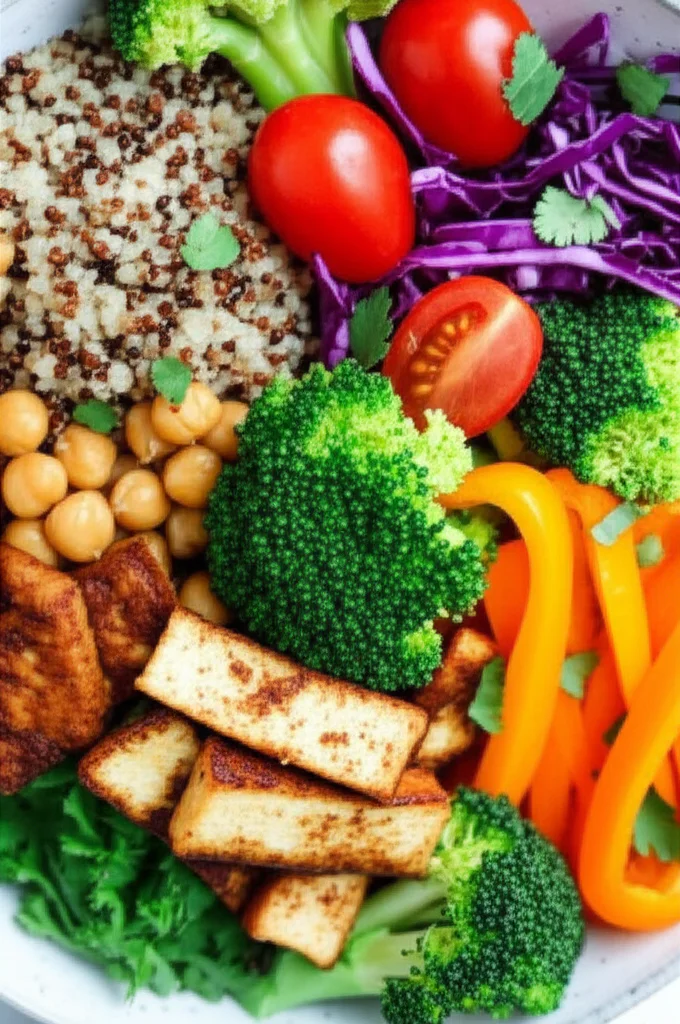
- Idea: Quinoa base, topped with chickpeas, cucumber, cherry tomatoes, Kalamata olives, red onion, a sprinkle of vegan feta (like Violife Just Like Feta Block), and a lemon-tahini dressing.
- Why it works: A complete protein, fiber-rich, and bursting with fresh flavors.
- 👉 Shop Violife Just Like Feta Block on: Amazon | Walmart | Instacart
- Hearty Lentil Soup with Crusty Bread:
- Idea: A big bowl of homemade lentil soup (packed with carrots, celery, and spinach) served with a slice of whole-grain crusty bread for dipping.
- Why it works: Warm, comforting, and incredibly nutritious. Lentils are a fantastic source of plant protein and fiber.
- Veggie & Hummus Sandwich/Wrap:
- Idea: Whole-grain bread or a large tortilla spread generously with hummus, layered with spinach, shredded carrots, bell pepper strips, cucumber, and a slice of smoked tofu (like Trader Joe’s Organic Baked Tofu).
- Why it works: Quick, portable, and customizable.
🍽️ Dinner: Delicious & Satisfying Plant-Based Feasts
Dinner is where you can really let your culinary creativity shine!
- Grilled Vegetable Kabobs with Tofu/Tempeh:
- Idea: Skewers loaded with bell peppers, zucchini, cherry tomatoes, mushrooms, and marinated tofu or tempeh, grilled to perfection. Serve with brown rice or a side salad. Harvard suggests “Grilled vegetable kabobs with tofu.” Source: Harvard Health Publishing
- Why it works: Visually appealing, great texture, and a balanced meal.
- Pasta with Beans and Greens:
- Idea: Whole-wheat pasta tossed with sautéed garlic, olive oil, cannellini beans, kale or spinach, and sun-dried tomatoes. Finish with a sprinkle of nutritional yeast for a cheesy flavor.
- Why it works: A classic comfort food, made healthier and plant-powered.
- Hearty Vegetarian Chili:
- Idea: A slow-cooked chili brimming with kidney beans, black beans, corn, diced tomatoes, bell peppers, and your favorite chili spices. Top with avocado and a dollop of dairy-free sour cream (like Kite Hill Sour Cream Alternative).
- Why it works: Perfect for meal prepping, freezes well, and incredibly satisfying.
- 👉 Shop Kite Hill Sour Cream Alternative on: Instacart | Kite Hill Official Website
- Sheet Pan Roasted Veggies & Chickpeas:
- Idea: Toss broccoli, sweet potatoes, red onion, and chickpeas with olive oil and spices (cumin, paprika, garlic powder). Roast on a sheet pan until tender and slightly crispy. Serve with a tahini drizzle.
- Why it works: Minimal cleanup, maximum flavor, and super easy!
🍎 Snacks: Smart Bites Between Meals
Keep hunger at bay and energy high with these quick plant-based snacks.
- Fresh Fruit & Nut Butter: Apple slices with peanut butter (like Justin’s Classic Peanut Butter), or banana with almond butter.
- Handful of Nuts & Seeds: Almonds, walnuts, cashews, pumpkin seeds, sunflower seeds.
- Veggies & Hummus: Carrot sticks, bell pepper strips, or cucumber slices with your favorite hummus.
- Edamame: Steamed and lightly salted, a great source of plant protein.
- Rice Cakes with Toppings: Rice cakes topped with avocado and everything bagel seasoning, or nut butter and banana.
Our Cook’s Anecdote: “I used to think ‘vegan food’ meant weird ingredients. But as a flexitarian cook, I’ve learned it’s about reimagining familiar dishes with plant power. My kids, who are notoriously picky, now devour my black bean tacos and lentil sloppy joes. The secret? Flavor, texture, and making it fun!” – Chef Alex, Flexitarian Diet™ Cook
The possibilities are truly endless! Don’t be afraid to experiment, try new ingredients, and discover your own plant-based favorites. For more delicious ideas and recipes, explore our Flexitarian Recipes section!
🥗 Exploring Vegetarian and Mediterranean Diets: Plant-Based Powerhouses
When we talk about successful, health-promoting plant-based eating patterns, two stars consistently shine bright: the Vegetarian Diet and the Mediterranean Diet. These aren’t just “diets” in the restrictive sense; they are time-tested, culturally rich ways of eating that prioritize plants and offer a wealth of benefits. Let’s explore why our dietitians and health coaches often recommend drawing inspiration from these powerhouses.
The Versatile Vegetarian Diet: A Spectrum of Choices
The term “vegetarian” itself is a broad umbrella, encompassing several variations, each with its own set of guidelines. As Harvard Health Publishing outlines, these diets support health with “lower risks of coronary heart disease, high blood pressure, diabetes, and increased longevity.” Source: Harvard Health Publishing
Here’s a quick look at the main types:
- Lacto-ovo Vegetarian: This is perhaps the most common type.
- ✅ Includes: Eggs (ovo) and dairy products (lacto) like milk, cheese, and yogurt.
- ❌ Excludes: Meat, poultry, fish, and seafood.
- Why it’s popular: Offers a good balance, making it easier to meet nutrient needs (especially B12 and calcium) and adapt to social eating.
- Lacto-Vegetarian:
- ✅ Includes: Dairy products.
- ❌ Excludes: Eggs, meat, poultry, fish, and seafood.
- Ovo-Vegetarian:
- ✅ Includes: Eggs.
- ❌ Excludes: Dairy products, meat, poultry, fish, and seafood.
- Pescatarian:
- ✅ Includes: Fish and seafood, eggs, and dairy.
- ❌ Excludes: Meat and poultry.
- Why it’s popular: Offers the health benefits of omega-3 fatty acids from fish while still being largely plant-focused.
- Semi-Vegetarian / Flexitarian: This is our sweet spot at Flexitarian Diet™!
- ✅ Includes: Eggs, dairy, and occasionally meat, poultry, fish, or seafood.
- ❌ Excludes: No strict exclusions, but animal products are consumed in smaller proportions and less frequently.
- Why it’s popular: Offers maximum flexibility and is often the easiest and most sustainable entry point into plant-based eating. It’s about reducing, not eliminating.
Our Dietitian’s Insight: “Many clients start with a flexitarian approach, and it’s incredibly effective. It allows them to gradually reduce animal product consumption without feeling overwhelmed or deprived. We often see significant health improvements even with moderate shifts.” – Dr. Anya, Flexitarian Diet™ Dietitian
The Mediterranean Diet: A Blueprint for Longevity
Ah, the Mediterranean diet! It’s not just a diet; it’s a lifestyle, a culinary tradition, and a scientific marvel. Harvard Health Publishing calls it a “foundation of plant foods” and cites strong evidence that it “reduces risk of heart disease, diabetes, certain cancers, depression, and frailty in older adults.” Source: Harvard Health Publishing
Key Principles of the Mediterranean Diet:
- Abundance of Plant Foods:
- Daily consumption of fruits, vegetables, whole grains, legumes, nuts, and seeds.
- Olive oil is the primary source of fat.
- Moderate Animal Products:
- Fish and seafood consumed a few times per week.
- Poultry, eggs, cheese, and yogurt consumed in moderate portions a few times weekly.
- Red meat and sweets are consumed infrequently, often reserved for special occasions.
- Lifestyle Factors:
- Regular physical activity.
- Sharing meals with others.
- Mindful eating.
Why the Mediterranean Diet is a Plant-Based Powerhouse:
- Rich in Antioxidants & Anti-inflammatory Compounds: From the colorful produce to the healthy fats in olive oil, it’s a powerhouse against chronic inflammation.
- High in Fiber: Promotes gut health and satiety.
- Balanced Macronutrients: Provides a good mix of complex carbohydrates, healthy fats, and lean proteins.
- Sustainable & Enjoyable: It’s a delicious and satisfying way to eat that doesn’t feel restrictive, making it easy to stick with long-term.
Both vegetarian and Mediterranean diets offer incredible blueprints for a healthy, plant-forward lifestyle. Whether you choose to follow one strictly or simply draw inspiration from their principles, you’re setting yourself up for success.
🌍 Environmental Impact: How Plant-Based Choices Help Save the Planet
Hold onto your kale, folks! While the personal health benefits of a plant-based lifestyle are undeniably compelling, there’s another colossal reason to embrace more greens: our planet. Our choices at the dinner table have a ripple effect that extends far beyond our own bodies, influencing everything from climate change to biodiversity. As a team deeply committed to holistic health, we believe understanding this connection is crucial for a truly sustainable lifestyle.
The Hidden Cost of Our Plates
The way we produce and consume food, particularly animal products, has a significant environmental footprint. Let’s break down some key areas:
- 📉 Reducing Greenhouse Gas Emissions:
- The Problem: Livestock farming, especially for beef and dairy, is a major contributor to greenhouse gases like methane and nitrous oxide, which are far more potent than carbon dioxide. The United Nations Food and Agriculture Organization (FAO) reports that livestock accounts for 14.5% of global anthropogenic greenhouse gas emissions. Source: FAO
- The Plant-Based Solution: Shifting towards plant-based foods dramatically reduces these emissions. Producing a plant-based burger, for instance, generates significantly fewer emissions than a beef burger.
- 💧 Conserving Precious Water Resources:
- The Problem: Animal agriculture is incredibly water-intensive. It takes vast amounts of water to grow feed for animals, hydrate them, and clean facilities. For example, producing one pound of beef can require thousands of gallons of water. Source: Water Footprint Network
- The Plant-Based Solution: Plant-based foods generally require far less water. Choosing lentils over beef, or almond milk over dairy milk, can save substantial amounts of water.
- 🌳 Preserving Land & Preventing Deforestation:
- The Problem: Huge tracts of land are cleared for grazing livestock and growing monoculture crops (like soy and corn) to feed them. This leads to deforestation, habitat destruction, and loss of biodiversity, particularly in vital ecosystems like the Amazon rainforest.
- The Plant-Based Solution: A plant-based food system requires significantly less land. By eating plants directly, we can feed more people with less land, allowing vital ecosystems to recover and thrive.
- 🗑️ Minimizing Waste & Pollution:
- The Problem: Industrial animal farms generate massive amounts of animal waste, which can pollute waterways and soil with nitrates and phosphates.
- The Plant-Based Solution: Plant-based agriculture, especially when practiced sustainably, can reduce this type of pollution.
Your Plate, Your Power!
It might feel like one person’s choices can’t make a difference, but imagine millions of people making small, consistent shifts. That’s a revolution! Every time you choose a plant-based meal, you’re casting a vote for a healthier planet.
Our Health Coach’s Anecdote: “For me, understanding the environmental impact was the final piece of the puzzle. I was already feeling great physically, but knowing that my food choices were also contributing positively to the planet gave me an even deeper sense of purpose and satisfaction. It’s a powerful motivator to keep exploring new plant-based recipes!” – Sarah, Flexitarian Diet™ Health Coach
So, the next time you’re enjoying a delicious lentil soup or a vibrant veggie stir-fry, remember you’re not just nourishing yourself; you’re helping to nourish the Earth too. It’s a beautiful synergy!
💪 Plant-Based Nutrition: Meeting Your Protein, Vitamins & Minerals Needs
One of the most common questions we hear at Flexitarian Diet™ is, “But where do you get your protein?!” And it’s a valid concern! Many people worry that a plant-based diet might leave them lacking essential nutrients. Our dietitians are here to bust those myths and show you how a well-planned plant-based diet can provide all the necessary protein, fats, carbohydrates, vitamins, and minerals for optimal health, as Harvard Health Publishing confidently states. Source: Harvard Health Publishing
The key is variety and planning. Let’s break down how to ensure you’re getting everything your body needs to thrive on a plant-powered path. For more detailed insights, explore our Flexitarian Nutrition Facts!
Protein Power: Beyond Meat!
Forget the idea that plants lack protein. They’re absolutely brimming with it! The trick is to incorporate a diverse range of plant protein sources throughout your day. Columbia University lists excellent options like tofu, lentils, beans, nuts, seeds, and quinoa. Source: Columbia University Irving Medical Center
| Plant Protein Source | Protein per serving (approx.) | Tips for Inclusion
🔚 Conclusion: Your Next Steps Toward a Vibrant Plant-Based Life

Wow, what a journey! From the roots of plant-based eating to the vibrant plates that fuel your day, we’ve covered a lot of ground together. At Flexitarian Diet™, we believe that adopting a plant-based lifestyle is less about rigid rules and more about embracing abundance, flavor, and vitality. Whether you’re a flexitarian dipping your toes in or a whole-food, plant-based enthusiast diving deep, the benefits are clear: improved health, enhanced energy, a lighter environmental footprint, and a delicious new world of culinary adventure.
Remember the question we teased earlier: Where do you get your protein? Now you know — plants provide all the protein and nutrients you need when you eat a varied, balanced diet. And if you ever feel overwhelmed, just take a deep breath and start small. Maybe it’s a Meatless Monday or swapping your milk for oat milk like Sarah did. Every plant-based choice counts and adds up to big wins.
The science is compelling, the stories are inspiring, and the flavors are irresistible. So, why wait? Your vibrant, plant-powered life awaits!
🌐 Recommended Links for Deeper Plant-Based Knowledge
Ready to stock your kitchen and bookshelf with the best plant-based essentials and resources? Here are some top picks from our team:
-
Bob’s Red Mill Organic Rolled Oats
Amazon | Walmart | Instacart -
Miyoko’s Kitchen Cultured Vegan Butter
Amazon | Miyoko’s Official Website -
Kite Hill Sour Cream Alternative
Instacart | Kite Hill Official Website -
Forks Over Knives: The Cookbook (A must-have for whole-food, plant-based recipes)
Amazon -
How Not to Die by Dr. Michael Greger (Science-backed insights on plant-based nutrition)
Amazon -
The Flexitarian Diet™ Official Website
Flexitarian Basics | Benefits of Flexitarian Diet | Flexitarian Nutrition Facts | Flexitarian Recipes
📝 Frequently Asked Questions (FAQ) About Plant-Based Lifestyles

Can a plant-based lifestyle help with chronic disease prevention, such as heart disease, diabetes, and certain types of cancer, and what are the scientific findings on this topic?
Absolutely! Scientific studies consistently show that plant-based diets reduce the risk of chronic diseases. Harvard Health Publishing highlights that plant-forward diets like the Mediterranean diet reduce heart disease risk, diabetes, and certain cancers. The high fiber, antioxidants, and healthy fats in plants support cardiovascular health and improve blood sugar control. Columbia University reports Mayor Eric Adams’ diabetes reversal after adopting a plant-based lifestyle. Learn more
Are there any specific plant-based foods that can help with weight loss, and what are some healthy plant-based snacks for weight management?
Yes! Foods high in fiber and water content like vegetables, fruits, legumes, and whole grains promote satiety and reduce calorie intake naturally. Lentils, beans, quinoa, and leafy greens are excellent for weight management. Healthy snacks include fresh fruit with nut butter, raw veggies with hummus, nuts and seeds, and edamame. These provide nutrients and keep hunger at bay without excess calories.
What are some common mistakes to avoid when transitioning to a plant-based lifestyle, and how can I make the process easier?
Common pitfalls include trying to change everything overnight, relying on processed vegan junk foods, and neglecting nutrient variety. To make it easier:
- Start gradually (e.g., Meatless Mondays).
- Focus on whole, minimally processed foods.
- Plan meals to include diverse protein sources.
- Stay hydrated and listen to your body.
- Seek support from dietitians or communities.
How can I ensure I am getting all the necessary nutrients, such as vitamin B12 and iron, on a plant-based diet?
Vitamin B12 is not naturally found in plants, so supplementation or fortified foods (like nutritional yeast or fortified plant milks) are essential. Iron is abundant in legumes, spinach, quinoa, and seeds but is better absorbed when paired with vitamin C-rich foods (like citrus or bell peppers). Regular blood tests and consultation with a healthcare provider help monitor nutrient status.
What are some easy and delicious plant-based meal ideas for beginners, including breakfast, lunch, and dinner options?
- Breakfast: Oatmeal with walnuts and banana; tofu scramble wraps; avocado toast with tomatoes.
- Lunch: Mediterranean quinoa salad; lentil soup with whole-grain bread; veggie and hummus sandwich.
- Dinner: Grilled vegetable kabobs with tofu; whole-wheat pasta with beans and greens; hearty vegetarian chili.
Explore more recipes in our Flexitarian Recipes section!
How do I get enough protein on a plant-based diet, and what are some high protein plant-based foods?
Protein is plentiful in plants when you eat a variety. Key sources include:
- Tofu and tempeh
- Lentils and beans
- Quinoa and whole grains
- Nuts and seeds
- Edamame and peas
Combining these throughout the day ensures you meet your protein needs without animal products.
What are the benefits of adopting a plant-based lifestyle for overall health and wellbeing?
Benefits include improved heart health, better blood sugar control, weight management, reduced cancer risk, enhanced mental clarity, improved gut health, increased energy, and a positive environmental impact. It’s a holistic approach that nurtures body, mind, and planet.
How can I transition to a mostly vegetarian diet?
Start by increasing plant foods and reducing meat gradually. Use the “half your plate” rule, try meatless days, and experiment with plant proteins. Flexibility is key—allow yourself to include animal products occasionally if desired. Our Flexitarian Basics offers great guidance.
What are the best whole foods to include in a plant-based diet?
Focus on:
- Fresh fruits and vegetables
- Whole grains like brown rice, quinoa, oats
- Legumes (beans, lentils, chickpeas)
- Nuts and seeds
- Healthy oils (olive oil, avocado oil)
Minimize processed foods for maximum health benefits.
Is a plant-based lifestyle suitable for athletes?
Yes! Many athletes thrive on plant-based diets by focusing on nutrient-dense foods, adequate protein, and proper calorie intake. Plant-based diets support endurance, recovery, and overall health. Our personal trainers recommend including a variety of plant proteins and complex carbs to fuel performance.
What are common challenges when adopting a plant-based lifestyle?
Challenges include social situations, meal planning, nutrient concerns, and cravings for familiar foods. Overcome these by planning ahead, seeking support, experimenting with recipes, and gradually shifting habits. Remember, flexibility and patience are your allies.
Can a plant-based diet help with weight loss and overall health?
Definitely! Plant-based diets are naturally lower in calories and higher in fiber, promoting fullness and reducing overeating. They also improve metabolic health, reduce inflammation, and lower risk factors for chronic diseases.
Additional FAQs
How do I handle dining out while following a plant-based lifestyle?
Look for restaurants with vegetarian or vegan options, or ask for plant-based modifications. Many cuisines (Mediterranean, Indian, Middle Eastern) offer naturally plant-based dishes. Apps like HappyCow can help find plant-friendly eateries.
Are supplements necessary on a plant-based diet?
Vitamin B12 supplementation is essential. Depending on individual needs, some may also consider vitamin D, omega-3 (from algae sources), and iron supplements. Consult a healthcare professional for personalized advice.
How do I deal with cravings for meat or dairy?
Cravings often diminish over time. Try plant-based alternatives like smoked tofu, tempeh bacon, or nut-based cheeses. Focus on flavorful, satisfying meals to reduce cravings.
📖 Reference Links and Scientific Sources
-
Harvard Health Publishing, “What is a Plant-Based Diet and Why Should You Try It?”
https://www.health.harvard.edu/blog/what-is-a-plant-based-diet-and-why-should-you-try-it-2018092614760 -
Forks Over Knives, Beginner Guide to Whole-Food, Plant-Based Diet
https://shop.forksoverknives.com/pages/beginner-guide -
Columbia University Irving Medical Center, “What is a Plant-Based Diet and Is It Healthy?”
https://www.cuimc.columbia.edu/news/what-plant-based-diet-and-it-healthy -
United Nations Food and Agriculture Organization (FAO), Livestock’s Environmental Impact
https://www.fao.org/news/story/en/item/197623/icode/ -
American Society for Nutrition, Fiber Intake and Health Outcomes
https://nutrition.org/news/2023/fiber-intake-and-health-outcomes-in-us-adults/ -
The Vegetarian Society, History and Principles
https://vegsoc.org/about-us/history/ -
Water Footprint Network, Water Use in Food Production
https://waterfootprint.org/en/water-footprint/product-water-footprint/water-footprint-crop-and-animal-products/ -
Bob’s Red Mill Official Website
https://www.bobsredmill.com/ -
Violife Official Website
https://violifefoods.com/ -
Miyoko’s Kitchen Official Website
https://miyokos.com/ -
Justin’s Official Website
https://justins.com/ -
Kite Hill Official Website
https://www.kitehillfoods.com/
We hope this comprehensive guide empowers you to embrace the plant-based lifestyle with confidence, joy, and deliciousness. Remember, every plant-powered choice is a step toward a healthier you and a healthier planet. Happy eating! 🌿🍽️💚