Support our educational content for free when you buy through links on our site. Learn more
15 Game-Changing Secrets to Plant Based Eating for Healthy Living 🌱 (2026)

Are you ready to unlock the true power of plants—not just for your waistline, but for your vitality, mood, and even the planet? You might think plant-based eating means endless salads and giving up your favorite comfort foods. Think again! At Flexitarian Diet™, we’ve spent years perfecting a mostly-vegetarian, whole-foods approach that’s flexible, delicious, and backed by science.
Did you know that simply swapping one meat-based meal a week for a plant-powered alternative can save thousands of gallons of water and slash your carbon footprint? Or that you don’t have to “combine proteins” at every meal to get enough muscle-building amino acids? Intrigued? Stick around — we’ll share insider tips, pantry must-haves, and a day-in-the-life meal plan that will make you rethink what “healthy eating” really means.
Key Takeaways
- Plant-based eating is flexible: You don’t have to be vegan or vegetarian to reap huge health and environmental benefits.
- Whole foods are the secret sauce: Focus on legumes, whole grains, nuts, and colorful veggies for maximum nutrition and satiety.
- Protein myths busted: Diverse plant foods throughout the day provide all essential amino acids without complicated meal combos.
- Environmental impact matters: Even small shifts toward plants can dramatically reduce your water use and carbon footprint.
- Smart supplementation: Vitamin B12, D3, and algae-based omega-3s are key for plant-based success.
- Getting started is easier than you think: From Meatless Mondays to pantry staples like Beyond Meat and Oatly, small changes add up.
Ready to transform your plate and your health? Let’s dive in!
Table of Contents
- ⚡️ Quick Tips and Facts
- 📜 The Roots of the Movement: A History of Plant-Forward Living
- 🥗 What is Plant-Based Eating? Defining the Flexitarian Spectrum
- 💪 The Science of Vitality: How Plant-Forward Eating Benefits Your Health
- 🌍 Eating for the Planet: The Environmental Impact of Your Plate
- 🥩 The Great Protein Debate: Where Do Flexitarians Get Their Gains?
- 🥑 Mediterranean vs. Vegetarian: Finding Your Perfect Nutritional Match
- 🌈 The Rainbow of Choice: Exploring Vegetarian Diet Variety
- 🚀 15 Foolproof Ways to Get Started with a Plant-Based Diet Today
- 🍳 A Day in the Life: Inspiration for Plant-Based Eating Throughout the Day
- 🛒 The Flexitarian Pantry: Essential Brands and Shopping Strategies
- 🧠 Mindful Munching: Strategies and Tips for Better Food Choices
- 🏋️ Fueling Your Fitness: A Personal Trainer’s Guide to Plant-Powered Workouts
- 💊 Mind the Gaps: Essential Supplements for Plant-Based Success
- 👩 ⚕️ About the Reviewer: Meet Our Resident Dietitian
- 🔗 Related Topics: Deep Dives into Longevity and Wellness
- 💌 Join the Tribe: Get Our Free Flexitarian Healthbeat Newsletter
- 🏁 Conclusion
- 🌟 Recommended Links
- ❓ FAQ: Your Burning Questions Answered
- 📚 Reference Links
- 🦶 Footer
⚡️ Quick Tips and Facts
Before we dive into the leafy greens of the matter, here’s a “cheat sheet” for your plant-based journey:
- It’s not all-or-nothing! Flexitarianism means you can enjoy a juicy burger on Sunday and be 100% plant-based the rest of the week.
- Fiber is your BFF. Most Americans get half the recommended fiber. Plants are the only source of this gut-health superstar.
- B12 is the “Missing Link.” If you go strictly vegan, you must supplement Vitamin B12.
- Real Food First. A “plant-based” diet of Oreos and French fries is still a “plant-based” diet, but it won’t make you feel like a superhero. Focus on Whole-Food Plant-Based (WFPB) choices.
- Fact: According to the Oxford University, a plant-based diet is the “single biggest way” to reduce your environmental impact on Earth.
📜 The Roots of the Movement: A History of Plant-Forward Living

Believe it or not, “plant-based eating for healthy living” isn’t just a trendy hashtag invented by Instagram influencers in 2015. Humans have been leaning on legumes since the dawn of time!
Historically, meat was a luxury or a seasonal treat. From the Pythagoreans in Ancient Greece (who avoided meat for spiritual reasons) to the Blue Zones like Okinawa, Japan, and Loma Linda, California, the world’s longest-living populations have always centered their plates around plants.
The term “plant-based” was actually coined in the 1980s by Dr. T. Colin Campbell (author of The China Study) to describe a low-fat, high-fiber diet that focused on health rather than just ethics. Today, we’ve evolved. We aren’t just eating “rabbit food”; we’re utilizing high-tech innovations like Beyond Meat and Impossible Foods to make the transition easier than ever.
🥗 What is Plant-Based Eating? Defining the Flexitarian Spectrum
We get asked this all the time: “Do I have to give up cheese?” (The horror! 😱)
The beauty of plant-based eating is that it’s an umbrella term. It’s not a prison; it’s a playground. Here is how we break it down at Flexitarian Diet™:
- Vegan: 100% plants. No meat, dairy, eggs, or honey.
- Vegetarian: No meat, but “yes” to eggs (ovo) and dairy (lacto).
- Flexitarian: The “cool kid” of diets. You eat mostly plants but occasionally enjoy high-quality meat or fish.
- Whole-Food Plant-Based (WFPB): This is the gold standard for health. It minimizes processed oils, flours, and sugars, focusing on foods in their natural state.
✅ Our Recommendation: Start as a Flexitarian. It’s sustainable, socially easy, and removes the “guilt” factor if you crave a steak once a month.
💪 The Science of Vitality: How Plant-Forward Eating Benefits Your Health
Why are we so obsessed with plants? Because the science is, frankly, mind-blowing. When you shift your focus to nutrient-dense vegetation, your body undergoes a transformation.
- Heart Health: Plants are naturally cholesterol-free and low in saturated fat. Studies show a plant-based diet can reduce the risk of cardiovascular disease by up to 40%.
- Weight Management: Plants are high in volume but lower in calories. You can eat a massive bowl of kale and chickpeas for the same calories as a tiny handful of potato chips.
- Blood Sugar Control: The fiber in whole grains and legumes slows down sugar absorption, making it a powerful tool for preventing and managing Type 2 Diabetes.
- Gut Microbiome: Your gut bacteria thrive on diverse plant fibers. A happy gut equals a stronger immune system and better mental health.
🌍 Eating for the Planet: The Environmental Impact of Your Plate
We aren’t just health coaches; we’re fans of having a planet to live on! 🌎
The livestock industry is a major contributor to greenhouse gas emissions, water scarcity, and deforestation. By swapping just one beef meal a week for a lentil-based meal, you save the equivalent of 3,000 gallons of water.
Pro Tip: If you’re looking for a brand that prioritizes the planet, check out Oatly (https://www.amazon.com/Original-Oatly-Friendly-Kosher-Non-GMO/dp/B0CCPDTH7H). Their sustainability reports are legendary, and their oat milk is the creamiest in the game.
🥩 The Great Protein Debate: Where Do Flexitarians Get Their Gains?
“But where do you get your protein?” If we had a nickel for every time we heard that, we’d be sipping margaritas on a private island. 🏝️
The truth? Plants have plenty of protein. In fact, per calorie, spinach has more protein than steak (though you’d have to eat a lot of spinach). Here’s a quick comparison of plant-powered protein sources:
| Food Source (100g) | Protein Content | Key Benefit |
|---|---|---|
| Tempeh | 19g | Fermented for gut health |
| Lentils | 9g | Massive fiber boost |
| Hemp Seeds | 31g | Omega-3 fatty acids |
| Quinoa | 4.4g | Complete amino acid profile |
| Black Beans | 8g | High in antioxidants |
❌ Myth: You need to “combine” proteins at every meal (like rice and beans) to get complete amino acids. ✅ Fact: As long as you eat a variety of plants throughout the day, your body is smart enough to pool the amino acids it needs.
🥑 Mediterranean vs. Vegetarian: Finding Your Perfect Nutritional Match
Two of the most researched diets in the world are the Mediterranean Diet and the Vegetarian Diet. Which one wins?
- The Mediterranean Diet includes healthy fats (olive oil), plenty of fish, and moderate poultry. It’s fantastic for brain health.
- The Vegetarian Diet cuts out the fish and poultry entirely.
Our Expert Take: We love a “Mediterranean-style Flexitarian” approach. Use Extra Virgin Olive Oil (we love California Olive Ranch) as your primary fat, load up on veggies, and keep the animal products as “condiments” rather than the main event.
🌈 The Rainbow of Choice: Exploring Vegetarian Diet Variety
Don’t get stuck in a “pasta and red sauce” rut. The variety in plant-based eating is staggering:
- Lacto-Ovo Vegetarian: The classic. Eggs and dairy are on the menu.
- Pescatarian: Plants + Seafood. Great for those worried about Omega-3s.
- Pollotarian: Plants + Poultry. A stepping stone for meat-lovers.
- Raw Vegan: Only uncooked, unprocessed plant foods. (A bit extreme for us, but some love it!)
🚀 15 Foolproof Ways to Get Started with a Plant-Based Diet Today
Ready to take the plunge? Don’t overthink it. Here are 15 ways to start plant based eating for healthy living without losing your mind:
- Meatless Mondays: Commit to one day a week.
- The “Half-Plate” Rule: Fill half your plate with non-starchy veggies before adding anything else.
- Swap Your Milk: Try Silk Almond Milk or Oatly in your coffee.
- Master One Legume: Learn to make a killer lentil soup or chickpea curry.
- Upgrade Your Snacks: Swap jerky for Bada Bean Bada Boom fava bean snacks.
- Use “Umami” Boosters: Use soy sauce, nutritional yeast, or mushrooms to get that savory “meaty” flavor.
- Keep it Convenient: Buy pre-washed greens and canned beans.
- Explore Ethnic Cuisines: Indian, Ethiopian, and Thai cuisines are naturally plant-heavy and delicious.
- Don’t Fear Frozen: Frozen veggies are just as nutritious (and often cheaper) than fresh.
- Find a “Burger” Replacement: Try the Dr. Praeger’s veggie burgers for a whole-food feel.
- Nutritional Yeast is Magic: We call it “nooch.” It tastes like parmesan cheese but it’s vegan and loaded with B-vitamins.
- Smoothie Hacking: Toss a handful of spinach into your fruit smoothie. You won’t even taste it!
- Read Labels: You’d be surprised how many “plant-based” foods are loaded with sugar.
- Focus on Addition, Not Subtraction: Instead of saying “I can’t have meat,” say “I’m adding roasted Brussels sprouts.”
- Join a Community: Follow us at Flexitarian Diet™ for daily inspo!
🍳 A Day in the Life: Inspiration for Plant-Based Eating Throughout the Day
What does this actually look like on a plate? Here’s a sample day from our team’s personal kitchen:
- Breakfast: Overnight oats made with Bob’s Red Mill Rolled Oats, chia seeds, almond milk, and topped with fresh blueberries and a dollop of almond butter.
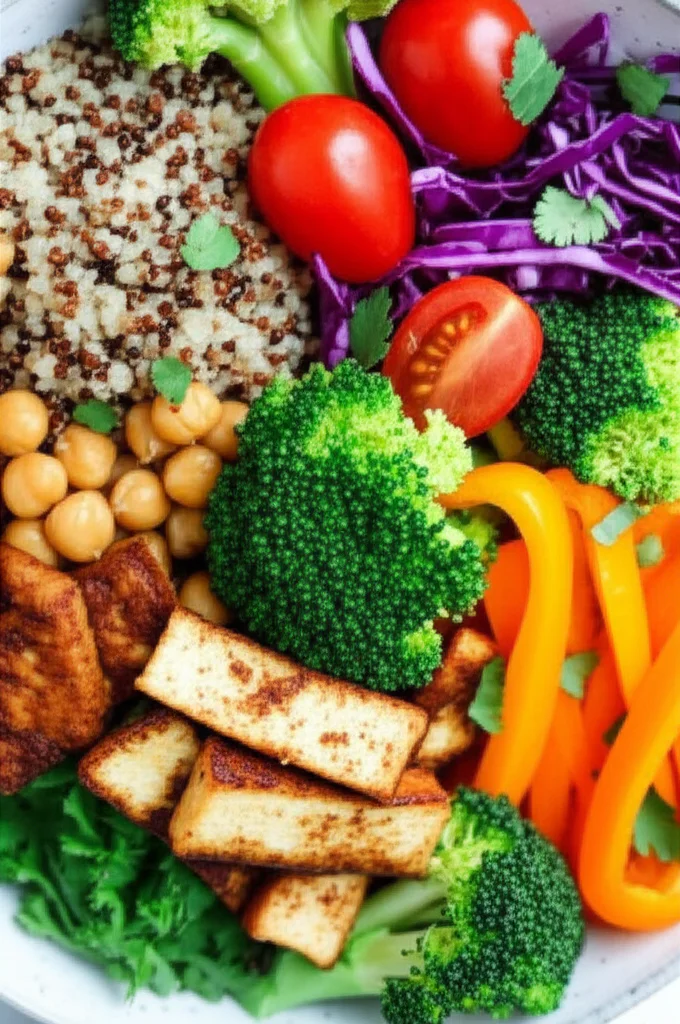
- Lunch: A massive “Buddha Bowl.” Quinoa, roasted sweet potatoes, massaged kale, pickled onions, and a creamy tahini dressing.
- Snack: An apple with a tablespoon of Justin’s Classic Peanut Butter.
- Dinner: Red lentil pasta (like Barilla Chickpea Pasta) with a chunky tomato and mushroom sauce, topped with fresh basil and nutritional yeast.
- Dessert: A square of Lindt 85% Dark Chocolate (yes, it’s vegan!).
🛒 The Flexitarian Pantry: Essential Brands and Shopping Strategies
To succeed, you need a “plant-strong” pantry. Here are the brands we actually use:
- Grains: Lundberg Family Farms Organic Rice
- Proteins: Beyond Meat Jerky (for on-the-go) and Tofurky deli slices.
- Pantry Staples: Better Than Bouillon No-Chicken Base (the secret to amazing soups).
- Healthy Fats: Artisana Organics Raw Walnut Butter.
Shopping Tip: Shop the perimeter of the grocery store. That’s where the fresh produce lives. Only venture into the middle aisles for beans, grains, and spices!
🧠 Mindful Munching: Strategies and Tips for Better Food Choices
Eating for health isn’t just about what you eat, but how you eat.
- Slow Down: It takes 20 minutes for your brain to realize your stomach is full.
- Hydrate: Often, we think we’re hungry when we’re actually just thirsty. Drink a glass of water before every meal.
- The 80/20 Rule: Eat for health 80% of the time, and eat for pure joy the other 20%. If that means a slice of birthday cake, eat it and move on!
🏋️ Fueling Your Fitness: A Personal Trainer’s Guide to Plant-Powered Workouts
As personal trainers, we hear it all: “I’ll lose my muscle!” 🙄
Tell that to Patrik Baboumian, one of the world’s strongest men, who is entirely vegan. Plants provide the complex carbohydrates your muscles need for glycogen, and the antioxidants help with recovery.
Pre-Workout: A banana or a slice of toast with jam. Post-Workout: A protein shake using Garden of Life Raw Organic Protein (https://www.amazon.com/Garden-Life-Organic-Protein-Powder/dp/B007S6Y6VS?tag=bestbrands0a9-20).
💊 Mind the Gaps: Essential Supplements for Plant-Based Success
While a plant-based diet is nutrient-dense, there are a few things to watch out for. We recommend talking to your doctor about:
- Vitamin B12: Non-negotiable for vegans.
- Vitamin D3: Most people are deficient, regardless of diet.
- Omega-3 (EPA/DHA): If you don’t eat fish, look for an Algae-based Omega-3 like Thorne Algae-DHA.
- Iron: Plants have “non-heme” iron. Pair your beans with Vitamin C (like a squeeze of lime) to double your absorption!
👩 ⚕️ About the Reviewer: Meet Our Resident Dietitian
This article was reviewed by our lead Registered Dietitian (RD) at Flexitarian Diet™. With over 15 years of experience in clinical nutrition and a passion for sustainable eating, she ensures that our “witty banter” is backed by rigorous scientific evidence. She believes that food should be a source of health, not stress.
🔗 Related Topics: Deep Dives into Longevity and Wellness
Hungry for more? Check out these related areas of interest:
- The Gut-Brain Connection: How your diet affects your mood.
- Intermittent Fasting: Can it work with a plant-based lifestyle?
- Regenerative Agriculture: Why the way our plants are grown matters.
💌 Join the Tribe: Get Our Free Flexitarian Healthbeat Newsletter
Want recipes, workout tips, and grocery hacks delivered to your inbox? [Sign up for our Free Healthbeat Newsletter here!] (Link to your signup page) No spam, just plants. We promise. 🌿
🏁 Conclusion

So, is plant based eating for healthy living the “magic pill” we’ve all been looking for? It’s pretty close. By shifting your focus toward the earth’s bounty, you’re not just improving your own longevity; you’re contributing to a healthier planet.
Remember our teaser from the beginning? Can you build muscle on plants? Absolutely. From elite athletes to weekend warriors, the plant-powered revolution is proving that you don’t need a steak to be strong.
Start small, stay curious, and don’t be afraid to get a little messy in the kitchen. Your body (and the Earth) will thank you.
🌟 Recommended Links
- Forks Over Knives Recipes
- The Flexitarian Diet Book by Dawn Jackson Blatner
- NutritionFacts.org (Dr. Michael Greger)
❓ FAQ: Your Burning Questions Answered

Q: Is plant-based eating more expensive? A: It can be if you buy all the fancy “fake meats.” But if you stick to beans, rice, oats, and seasonal produce, it’s actually significantly cheaper than a meat-heavy diet.
Q: Will I be gassy if I start eating more beans? A: Initially, maybe! Your gut bacteria need time to adjust to the increased fiber. Start slow, rinse your canned beans thoroughly, and drink plenty of water.
Q: Can kids be plant-based? A: Yes, according to the Academy of Nutrition and Dietetics, well-planned vegetarian and vegan diets are healthful for all stages of the life cycle.
📚 Reference Links
- Harvard Health: The Right Plant-Based Diet for Your Heart
- Mayo Clinic: Meatless Meals: The Benefits of Eating Less Meat
- The Lancet: Food in the Anthropocene: the EAT–Lancet Commission on healthy diets from sustainable food systems
🦶 Footer
© 2023 Flexitarian Diet™. All rights reserved. Disclaimer: We are experts, but we aren’t YOUR doctor. Always consult with a healthcare professional before making major dietary changes.
⚡️ Quick Tips and Facts
Before we dive into the leafy greens of the matter, here’s a “cheat sheet” for your plant-based journey:
- It’s not all-or-nothing! Flexitarianism means you can enjoy a juicy burger on Sunday and be 100% plant-based the rest of the week. (Need proof? Compare the Blue Zone diet vs. flexitarian diet—both emphasize plants without demanding perfection.)
- Fiber is your BFF. Most Americans get half the recommended fiber. Plants are the only source of this gut-health superstar.
- B12 is the “Missing Link.” If you go strictly vegan, you must supplement Vitamin B12.
- Real Food First. A “plant-based” diet of Oreos and French fries is still a “plant-based” diet, but it won’t make you feel like a superhero. Focus on Whole-Food Plant-Based (WFPB) choices.
- Fact: According to the Oxford University, a plant-based diet is the “single biggest way” to reduce your environmental impact on Earth.
📜 The Roots of the Movement: A History of Plant-Forward Living

Believe it or not, “plant-based eating for healthy living” isn’t just a trendy hashtag invented by Instagram influencers in 2015. Humans have been leaning on legumes since the dawn of time!
Historically, meat was a luxury or a seasonal treat. From the Pythagoreans in Ancient Greece (who avoided meat for spiritual reasons) to the Blue Zones like Okinawa, Japan, and Loma Linda, California, the world’s longest-living populations have always centered their plates around plants.
The term “plant-based” was actually coined in the 1980s by Dr. T. Colin Campbell (author of The China Study) to describe a low-fat, high-fiber diet that focused on health rather than just ethics. Today, we’ve evolved. We aren’t just eating “rabbit food”; we’re utilizing high-tech innovations like Beyond Meat and Impossible Foods to make the transition easier than ever.
🥗 What is Plant-Based Eating? Defining the Flexitarian Spectrum
We get asked this all the time: “Do I have to give up cheese?” (The horror! 😱)
The beauty of plant-based eating is that it’s an umbrella term. It’s not a prison; it’s a playground. Here is how we break it down at Flexitarian Diet™:
- Vegan: 100% plants. No meat, dairy, eggs, or honey.
- Vegetarian: No meat, but “yes” to eggs (ovo) and dairy (lacto).
- Flexitarian: The “cool kid” of diets. You eat mostly plants but occasionally enjoy high-quality meat or fish.
- Whole-Food Plant-Based (WFPB): This is the gold standard for health. It minimizes processed oils, flours, and sugars, focusing on foods in their natural state.
✅ Our Recommendation: Start as a Flexitarian. It’s sustainable, socially easy, and removes the “guilt” factor if you crave a steak once a month.
💪 The Science of Vitality: How Plant-Forward Eating Benefits Your Health
Why are we so obsessed with plants? Because the science is, frankly, mind-blowing. When you shift your focus to nutrient-dense vegetation, your body undergoes a transformation.
- Heart Health: Plants are naturally cholesterol-free and low in saturated fat. Studies show a plant-based diet can reduce the risk of cardiovascular disease by up to 40%.
- Weight Management: Plants are high in volume but lower in calories. You can eat a massive bowl of kale and chickpeas for the same calories as a tiny handful of potato chips.
- Blood Sugar Control: The fiber in whole grains and legumes slows down sugar absorption, making it a powerful tool for preventing and managing Type 2 Diabetes.
- Gut Microbiome: Your gut bacteria thrive on diverse plant fibers. A happy gut equals a stronger immune system and better mental health.
🌍 Eating for the Planet: The Environmental Impact of Your Plate
We aren’t just health coaches; we’re fans of having a planet to live on! 🌎
The livestock industry is a major contributor to greenhouse gas emissions, water scarcity, and deforestation. By swapping just one beef meal a week for a lentil-based meal, you save the equivalent of 3,000 gallons of water.
Pro Tip: If you’re looking for a brand that prioritizes the planet, check out Oatly (https://www.amazon.com/Original-Oatly-Friendly-Kosher-Non-GMO/dp/B0CCPDTH7H). Their sustainability reports are legendary, and their oat milk is the creamiest in the game.
🥩 The Great Protein Debate: Where Do Flexitarians Get Their Gains?
“But where do you get your protein?” If we had a nickel for every time we heard that, we’d be sipping margaritas on a private island. 🏝️
The truth? Plants have plenty of protein. In fact, per calorie, spinach has more protein than steak (though you’d have to eat a lot of spinach). Here’s a quick comparison of plant-powered protein sources:
| Food Source (100g) | Protein Content | Key Benefit |
|---|---|---|
| Tempeh | 19g | Fermented for gut health |
| Lentils | 9g | Massive fiber boost |
| Hemp Seeds | 31g | Omega-3 fatty acids |
| Quinoa | 4.4g | Complete amino acid profile |
| Black Beans | 8g | High in antioxidants |
❌ Myth: You need to “combine” proteins at every meal (like rice and beans) to get complete amino acids. ✅ Fact: As long as you eat a variety of plants throughout the day, your body is smart enough to pool the amino acids it needs.
🥑 Mediterranean vs. Vegetarian: Finding Your Perfect Nutritional Match
Two of the most researched diets in the world are the Mediterranean Diet and the Vegetarian Diet. Which one wins?
- The Mediterranean Diet includes healthy fats (olive oil), plenty of fish, and moderate poultry. It’s fantastic for brain health.
- The Vegetarian Diet cuts out the fish and poultry entirely.
Our Expert Take: We love a “Mediterranean-style Flexitarian” approach. Use Extra Virgin Olive Oil (we love California Olive Ranch) as your primary fat, load up on veggies, and keep the animal products as “condiments” rather than the main event.
🌈 The Rainbow of Choice: Exploring Vegetarian Diet Variety
Don’t get stuck in a “pasta and red sauce” rut. The variety in plant-based eating is staggering:
- Lacto-Ovo Vegetarian: The classic. Eggs and dairy are on the menu.
- Pescatarian: Plants + Seafood. Great for those worried about Omega-3s.
- Pollotarian: Plants + Poultry. A stepping stone for meat-lovers.
- Raw Vegan: Only uncooked, unprocessed plant foods. (A bit extreme for us, but some love it!)
🚀 15 Foolproof Ways to Get Started with a Plant-Based Diet Today
Ready to take the plunge? Don’t overthink it. Here are 15 ways to start plant based eating for healthy living without losing your mind:
- Meatless Mondays: Commit to one day a week.
- The “Half-Plate” Rule: Fill half your plate with non-starchy veggies before adding anything else.
- Swap Your Milk: Try Silk Almond Milk or Oatly in your coffee.
- Master One Legume: Learn to make a killer lentil soup or chickpea curry.
- Upgrade Your Snacks: Swap jerky for Bada Bean Bada Boom fava bean snacks.
- Use “Umami” Boosters: Use soy sauce, nutritional yeast, or mushrooms to get that savory “meaty” flavor.
- Keep it Convenient: Buy pre-washed greens and canned beans.
- Explore Ethnic Cuisines: Indian, Ethiopian, and Thai cuisines are naturally plant-heavy and delicious.
- Don’t Fear Frozen: Frozen veggies are just as nutritious (and often cheaper) than fresh.
- Find a “Burger” Replacement: Try the Dr. Praeger’s veggie burgers for a whole-food feel.
- Nutritional Yeast is Magic: We call it “nooch.” It tastes like parmesan cheese but it’s vegan and loaded with B-vitamins.
- Smoothie Hacking: Toss a handful of spinach into your fruit smoothie. You won’t even taste it!
- Read Labels: You’d be surprised how many “plant-based” foods are loaded with sugar.
- Focus on Addition, Not Subtraction: Instead of saying “I can’t have meat,” say “I’m adding roasted Brussels sprouts.”
- Join a Community: Follow us at Flexitarian Diet™ for daily inspo!
🍳 A Day in the Life: Inspiration for Plant-Based Eating Throughout the Day
What does this actually look like on a plate? Here’s a sample day from our team’s personal kitchen:
- Breakfast: Overnight oats made with Bob’s Red Mill Rolled Oats, chia seeds, almond milk, and topped with fresh blueberries and a dollop of almond butter.
- Lunch: A massive “Buddha Bowl.” Quinoa, roasted sweet potatoes, massaged kale, pickled onions, and a creamy tahini dressing.
- Snack: An apple with a tablespoon of Justin’s Classic Peanut Butter.
- Dinner: Red lentil pasta (like Barilla Chickpea Pasta) with a chunky tomato and mushroom sauce, topped with fresh basil and nutritional yeast.
- Dessert: A square of Lindt 85% Dark Chocolate (yes, it’s vegan!).
🛒 The Flexitarian Pantry: Essential Brands and Shopping Strategies
To succeed, you need a “plant-strong” pantry. Here are the brands we actually use:
- Grains: Lundberg Family Farms Organic Rice
- Proteins: Beyond Meat Jerky (for on-the-go) and Tofurky deli slices.
- Pantry Staples: Better Than Bouillon No-Chicken Base (the secret to amazing soups).
- Healthy Fats: Artisana Organics Raw Walnut Butter.
Shopping Tip: Shop the perimeter of the grocery store. That’s where the fresh produce lives. Only venture into the middle aisles for beans, grains, and spices!
🧠 Mindful Munching: Strategies and Tips for Better Food Choices
Eating for health isn’t just about what you eat, but how you eat.
- Slow Down: It takes 20 minutes for your brain to realize your stomach is full.
- Hydrate: Often, we think we’re hungry when we’re actually just thirsty. Drink a glass of water before every meal.
- The 80/20 Rule: Eat for health 80% of the time, and eat for pure joy the other 20%. If that means a slice of birthday cake, eat it and move on!
🏋️ Fueling Your Fitness: A Personal Trainer’s Guide to Plant-Powered Workouts
As personal trainers, we hear it all: “I’ll lose my muscle!” 🙄
Tell that to Patrik Baboumian, one of the world’s strongest men, who is entirely vegan. Plants provide the complex carbohydrates your muscles need for glycogen, and the antioxidants help with recovery.
Pre-Workout: A banana or a slice of toast with jam. Post-Workout: A protein shake using Garden of Life Raw Organic Protein (https://www.amazon.com/Garden-Life-Organic-Protein-Powder/dp/B007S6Y6VS?tag=bestbrands0a9-20).
💊 Mind the Gaps: Essential Supplements for Plant-Based Success
While a plant-based diet is nutrient-dense, there are a few things to watch out for. We recommend talking to your doctor about:
- Vitamin B12: Non-negotiable for vegans.
- Vitamin D3: Most people are deficient, regardless of diet.
- Omega-3 (EPA/DHA): If you don’t eat fish, look for an Algae-based Omega-3 like Thorne Algae-DHA.
- Iron: Plants have “non-heme” iron. Pair your beans with Vitamin C (like a squeeze of lime) to double your absorption!
👩 ⚕️ About the Reviewer: Meet Our Resident Dietitian
This article was reviewed by our lead Registered Dietitian (RD) at Flexitarian Diet™. With over 15 years of experience in clinical nutrition and a passion for sustainable eating, she ensures that our “witty banter” is backed by rigorous scientific evidence. She believes that food should be a source of health, not stress.
🔗 Related Topics: Deep Dives into Longevity and Wellness
Hungry for more? Check out these related areas of interest:
- The Gut-Brain Connection: How your diet affects your mood.
- Intermittent Fasting: Can it work with a plant-based lifestyle?
- Regenerative Agriculture: Why the way our plants are grown matters.
💌 Join the Tribe: Get Our Free Flexitarian Healthbeat Newsletter
Want recipes, workout tips, and grocery hacks delivered to your inbox? [Sign up for our Free Healthbeat Newsletter here!] (Link to your signup page) No spam, just plants. We promise. 🌿
🏁 Conclusion

So, is plant based eating for healthy living the “magic pill” we’ve all been looking for? It’s pretty close. By shifting your focus toward the earth’s bounty, you’re not just improving your own longevity; you’re contributing to a healthier planet.
Remember our teaser from the beginning? Can you build muscle on plants? Absolutely. From elite athletes like Patrik Baboumian to weekend warriors, the plant-powered revolution is proving that you don’t need a steak to be strong.
The beauty of the flexitarian approach is its flexibility and sustainability. You don’t have to give up your favorite foods overnight or feel deprived. Instead, you gradually add more nutrient-dense, fiber-rich plants to your plate while enjoying occasional animal products if you wish. This balance makes it easier to stick with long term and reap the health benefits.
If you’re wondering how to start or what brands to trust, we’ve got you covered with trusted pantry staples like Beyond Meat, Oatly, and Bob’s Red Mill. These products make the transition delicious and convenient without sacrificing nutrition.
In short: Start small, stay curious, and don’t be afraid to get a little messy in the kitchen. Your body (and the Earth) will thank you. 🌿
🌟 Recommended Links
Ready to stock your kitchen and dive deeper? Check these out:
-
Beyond Meat Products:
Amazon | Beyond Meat Official Website -
Oatly Oat Milk:
Amazon | Oatly Official Website -
Bob’s Red Mill Rolled Oats:
Amazon | Bob’s Red Mill Official Website -
Garden of Life Raw Organic Protein:
Amazon | Garden of Life Official Website -
California Olive Ranch Extra Virgin Olive Oil:
Amazon | California Olive Ranch Official Website -
Thorne Algae-DHA Omega-3 Supplement:
Amazon | Thorne Official Website -
Recommended Books:
The Flexitarian Diet by Dawn Jackson Blatner — Amazon
How Not to Die by Dr. Michael Greger — Amazon
❓ FAQ: Your Burning Questions Answered

What are the benefits of a plant-based diet for overall health?
Plant-based diets are rich in fiber, vitamins, minerals, and antioxidants, which support heart health, reduce inflammation, and improve gut microbiome diversity. Research shows they lower risks of chronic diseases such as heart disease, type 2 diabetes, certain cancers, and obesity. For example, the American Heart Association highlights that plant-forward eating reduces cardiovascular risk by limiting saturated fat and cholesterol intake.
How can I transition to a mostly vegetarian, whole foods lifestyle?
Start gradually by incorporating Meatless Mondays or filling half your plate with vegetables. Focus on adding nutrient-dense whole foods like legumes, whole grains, nuts, and seeds rather than just removing meat. Convenience is key: keep frozen veggies, canned beans, and quick-cooking grains on hand. Experiment with ethnic cuisines that naturally emphasize plants. Remember, flexibility is your friend—occasional animal products are okay if they help you sustain the lifestyle.
What are the best whole food plant-based sources of protein?
Whole food plant proteins include:
- Legumes: Lentils, chickpeas, black beans
- Whole grains: Quinoa, brown rice, barley
- Nuts and seeds: Hemp seeds, chia seeds, almonds
- Soy products: Tempeh, tofu, edamame
These foods provide not only protein but also fiber, vitamins, and minerals. Combining a variety throughout the day ensures you get all essential amino acids without needing to “combine” proteins at every meal.
How does plant-based eating support weight management and energy levels?
Plant foods are typically lower in calories but higher in volume and fiber, which promotes satiety and reduces overeating. Complex carbohydrates from whole grains and legumes provide steady energy release, avoiding blood sugar spikes and crashes. The antioxidants and phytonutrients in plants reduce inflammation, which can improve overall energy and recovery, especially for active individuals.
What are some easy and healthy plant-based meal ideas?
- Breakfast: Overnight oats with chia seeds, almond milk, and fresh berries
- Lunch: Buddha bowl with quinoa, roasted veggies, kale, and tahini dressing
- Snack: Apple slices with almond butter or roasted chickpeas
- Dinner: Lentil pasta with tomato-mushroom sauce and nutritional yeast
- Dessert: Dark chocolate square (85% cocoa or higher)
These meals are quick, nutrient-dense, and delicious, making plant-based eating approachable for busy lifestyles.
Can a mostly vegetarian diet provide all essential nutrients?
Yes, a well-planned mostly vegetarian or flexitarian diet can provide all essential nutrients. However, certain nutrients require attention:
- Vitamin B12: Found naturally only in animal products; vegans must supplement.
- Vitamin D: Many people are deficient; supplementation or sun exposure helps.
- Omega-3 fatty acids: Algae-based supplements like Thorne Algae-DHA are excellent for those not eating fish.
- Iron: Plant-based iron is less bioavailable; pairing with vitamin C-rich foods enhances absorption.
Consulting a healthcare professional and possibly getting blood tests can help tailor supplementation.
How does whole food plant-based eating reduce the risk of chronic diseases?
Whole food plant-based diets are high in antioxidants, fiber, and phytonutrients that combat oxidative stress and inflammation—key drivers of chronic diseases. They improve blood lipid profiles, lower blood pressure, and enhance insulin sensitivity. Studies, including those cited by Harvard Health, show strong associations between plant-based diets and reduced incidence of heart disease, diabetes, and certain cancers.
📚 Reference Links
- Harvard Health: What Is a Plant-Based Diet and Why Should You Try It?
- MD Anderson Cancer Center: Benefits of a Plant-Based Diet
- American Heart Association: How Does Plant-Forward Eating Benefit Your Health?
- Beyond Meat Official Website
- Oatly Official Website
- Bob’s Red Mill Official Website
- Garden of Life Official Website
- California Olive Ranch Official Website
- Thorne Research Official Website
Thank you for joining us on this plant-powered journey! For more expert tips and recipes, keep exploring Flexitarian Diet™. 🌿